Selling a waterfront home in Sarasota means buyers will look hard at your seawall, dock, and lift. You want those conversations to build confidence, not trigger last‑minute renegotiations. With a bit of prep, you can show clear condition, permits, and maintenance history that support your price and timeline. This guide walks you through what to check, how permits and insurance work, and the simple steps to get market‑ready. Let’s dive in.
Why these checks matter
Waterfront structures are high‑value features that often drive inspection findings and repair requests. When you document condition, permits, and recent work, you reduce buyer uncertainty and protect your net. Florida sellers also have a legal duty to disclose known material facts that are not obvious, which can include seawall or dock issues. You can read more about disclosure standards in Florida through the state bar’s overview of case guidance like Johnson v. Davis Florida Bar jury instruction context.
Insurance creates another layer of risk. Standard flood policies often exclude seawalls, bulkheads, piers, and docks, and many homeowner policies limit or exclude them too. It helps to verify what is covered and share that with buyers since it affects risk and future costs FEMA NFIP exclusions.
Regulations also matter. Docks, lifts, and seawalls are regulated by multiple agencies. Unpermitted work or impacts to protected habitat can lead to correction orders that stall a sale. The Florida Department of Environmental Protection offers clear permitting guidance for single‑family docks and shoreline stabilization FDEP South District permitting.
Know the rules in Sarasota
County and city basics
If your property is in unincorporated Sarasota County, the Water and Navigation Control Authority rules set siting, dimensions, and environmental protections for docks, lifts, and shoreline work Sarasota County WNCA code. Inside the City of Sarasota, city waterfront and dock provisions apply, which differ in details like decking elevation and lift height City of Sarasota waterfront provisions. Always confirm which jurisdiction you are in, since the standards and permits differ.
State and federal permits
Beyond local rules, the Florida Department of Environmental Protection reviews environmental resource permits, submerged lands use, and shoreline stabilization for this area FDEP South District permitting. Certain work in navigable waters can also require review by the U.S. Army Corps of Engineers USACE permitting context. Many projects need state or federal approvals before local permits are issued.
Timelines to expect
Some like‑for‑like repairs are exempt, but many repairs, replacements, and new lifts need permits. State environmental permits often have statutory review windows, and more complex projects can run longer Florida Statutes Chapter 403. Plan anywhere from a few weeks to several months depending on scope, completeness, and whether a public hearing or multi‑agency review is required. Start early if you intend to repair before listing.
What inspectors look for
Seawall checklist
- Alignment and verticality, looking for leaning or bulging.
- Top cap cracks, spalls, or signs of undermining.
- Toe and scour at the base, including exposed foundation.
- Through‑wall leaks, saturated backfill, or sinkholes behind the wall.
- Corrosion or failure of tiebacks and anchors.
- Joint separation, panel delamination, or seam failure.
- Drainage and weep holes that are clogged or failing.
- Evidence of recent repairs and whether the wall stayed within permitted alignment.
A written report with photos, approximate length, estimated remaining life, and a repair estimate is ideal. For major structural concerns, bring in a licensed engineer. For background on seawall elements and repairs, review a marine retaining wall primer retaining wall overview.
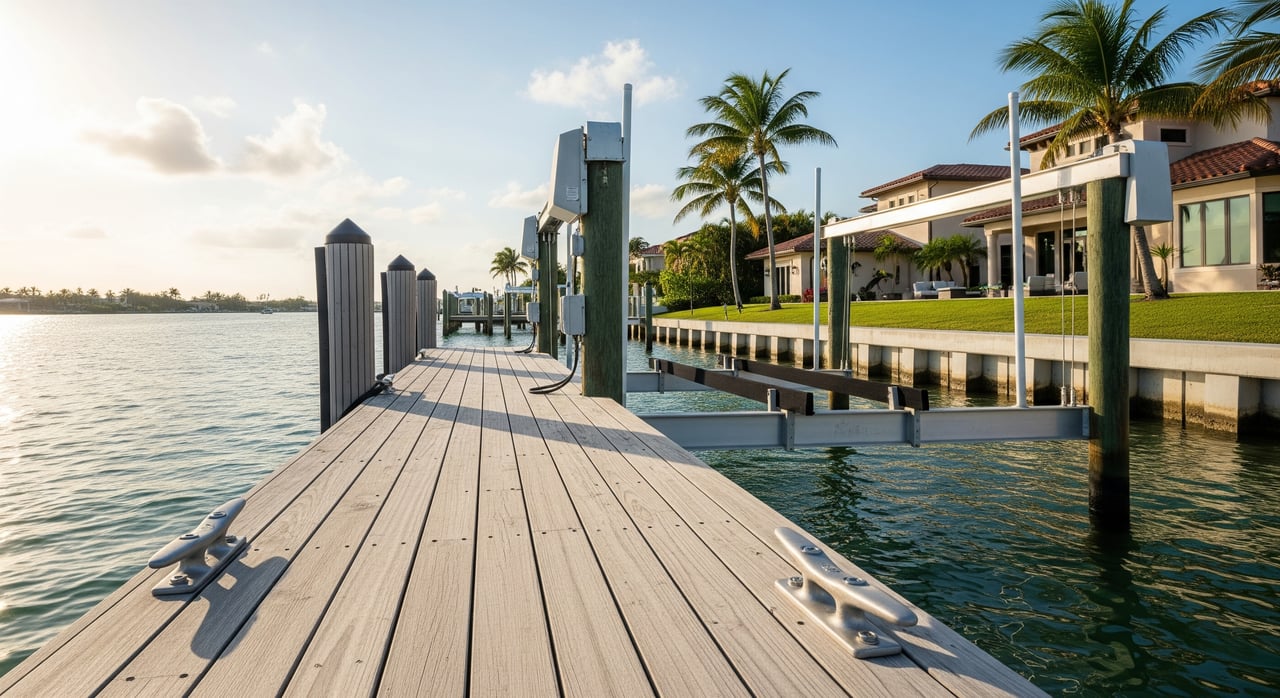
Dock checklist
- Pilings for rot, marine borer damage, corrosion, and plumbness.
- Decking, framing, fasteners, railing condition, and code compliance.
- Decking spacing over seagrass where required by local rules WNCA standards for docks.
- Safety and navigation, such as protrusions or channel impacts.
- Utilities like shore power, water, fuel lines, cleats, and ladder safety.
- Signs of unpermitted expansions or alterations.
Boat lift checklist
- Structural connections, beams, frames, fasteners, and welds for corrosion.
- Mechanical systems like winch, motor, gearbox, cables or straps, and rollers.
- Electrical components, including GFCI protection and marine‑grade wiring.
- Operational test under a light load by a qualified technician.
- Capacity labeling relative to the buyer’s likely boat.
- Local limits on lift height or boathouse features within city rules city lift restrictions.
Who should inspect
Hire a licensed marine contractor for docks and lifts. If the seawall looks compromised or replacement is likely, add a licensed civil, structural, or coastal engineer. Keep all written reports and contact details to share with buyers. You can verify Florida contractor licensing on the DBPR site DBPR license lookup.
Insurance and disclosure essentials
Coverage gaps to confirm
The National Flood Insurance Program’s standard policy excludes seawalls, bulkheads, piers, and docks from coverage. Many homeowner or private flood policies also exclude or sublimit these structures NFIP exclusions. Collect your policy declarations and any endorsements, and summarize past storm or flood claims so buyers can understand risk and insurability.
Florida disclosure rules
Florida sellers must disclose known facts that materially affect value and are not easily observable, a standard shaped by Johnson v. Davis. Flood‑related disclosure requirements were expanded statewide in 2024, including certain flood claim and assistance history beginning October 1, 2024 Florida Bar guidance and flood disclosure update. Disclose any known seawall, dock, or lift issues, unpermitted work, prior storm damage, and permit status. Attach repair receipts, permits, reports, and warranties to support the disclosure.
Plan repairs or price accordingly
Some sellers choose to complete targeted repairs before listing, which can shorten negotiations and speed appraisal and underwriting. Others disclose issues and price accordingly, providing bids so buyers can budget. Either path can work when you are transparent and well‑documented.
For ballpark context only, seawall costs vary widely by material, access, and depth, roughly from the low hundreds per linear foot to several hundred per linear foot on complex projects seawall cost overview. Small residential docks can range from the low five figures upward depending on size and materials dock cost basics. Lift repairs can be a few hundred to low thousands, while full replacements often reach into the tens of thousands based on capacity and features lift cost context. Always get itemized local bids before setting strategy.
Your pre‑listing prep checklist
- Order a professional assessment.
- Hire a licensed marine contractor for the dock and lift. Add an engineer if the seawall shows movement, cracking, or settlement. Request a written report with photos and a repair estimate.
- Gather documentation.
- Pull copies or numbers for past county, city, FDEP, and USACE permits. Include any engineer reports, contractor invoices, maintenance logs, and lift warranties FDEP permitting guidance.
- Confirm insurance and claims.
- Compile policy declarations for homeowner and flood coverage, plus any marine endorsements. Note any exclusions for seawalls and docks and summarize storm or flood claims NFIP exclusions.
- Complete disclosures.
- Disclose known defects, unpermitted work, storm damage history, and permit status for all waterfront structures. Include supporting documents for clarity Florida Bar guidance.
- Decide repair vs. credit.
- Use your estimates to choose between pre‑listing repairs or pricing/credits. Package bids and timelines to help buyers evaluate quickly.
- Start permits early if needed.
- If repairs require permits, begin now. Multi‑agency review can add weeks or months, especially for complex shoreline sites FDEP South District permitting. If emergency measures were taken after a storm, document any temporary authorizations or variance requests local variance context.
- Prepare a buyer packet.
- Create a clean PDF set with inspection reports, permits, insurance summaries, warranties, and contractor contacts. This reduces due diligence friction and builds trust.
Local Sarasota notes
Sarasota County’s WNCA code includes siting limits, setbacks, and requirements that minimize impacts to seagrass and mangroves. Properties on exposed shorelines, such as Siesta Key or Gulf‑facing lots, often face stricter review and more detailed design standards WNCA code highlights. Boat lift height rules are an active topic across the region, and some jurisdictions have considered changes after recent storm seasons. Always verify current local ordinances before advertising lift specs regional lift rules under review.
You do not have to navigate this alone. If you want a clear plan that preserves value and presents your waterfront features with confidence, reach out for a consultation. We will help you line up inspections, documentation, and a marketing strategy that showcases your shoreline lifestyle. Connect with the team at HomeScene Realty to get started.
FAQs
What should Sarasota sellers inspect on a seawall before listing?
- Check for leaning or bulging, top cap cracking, toe scour, leaks behind the wall, tieback corrosion, joint separation, and clogged weep holes, then document with photos and a contractor or engineer report.
Are docks and seawalls covered by flood insurance in Florida?
- Standard NFIP flood policies exclude docks, piers, and seawalls, and many homeowner policies limit or exclude them, so confirm coverage and share policy details with buyers.
Do I need permits to repair or replace my dock in Sarasota?
- Many repairs and replacements require permits from the city or county, and sometimes from FDEP and the USACE, so verify early and allow several weeks to months for review depending on scope and complexity.
How do Sarasota rules differ between the county and the city?
- Unincorporated Sarasota County follows WNCA standards for siting, size, and environmental protections, while properties in the City of Sarasota follow city‑specific waterfront and dock provisions with different dimensions and lift limits.
What documents help buyers feel confident about my waterfront structures?
- Provide inspection reports, photos, permits, insurance declarations and claims summaries, repair invoices, warranties, and contractor contacts in a single, easy‑to‑share packet.
What are typical costs to repair a seawall, dock, or lift?
- Costs vary widely by material and site, from the low hundreds per foot for some seawalls to higher figures for complex builds, with docks often in the five‑figure range and lift replacements reaching into the tens of thousands, so get itemized local bids.